Table of Contents
- 1 Why the Brain Matters in Chronic Pain
- 2 The Pain System as an Orchestra
- 3 Neuroplasticity: The Brain Learns Pain
- 4 Pain in the Brain Is Not Imaginary
- 5 How Chronic Pain Changes the Brain and Body
- 6 Breaking the Cycle: The Power of Understanding
- 7 You’re Not Weak. You’re Adaptive.
- 8 Frequently Asked Questions About Chronic Pain and the Brain
Introduction
If you live with chronic pain, you’ve probably heard someone say it’s “just in your head.” The truth is more complex: chronic pain and the brain are deeply connected—but that doesn’t make your pain any less real.
Let’s set the record straight: chronic pain is real. It’s not imagined. But it is processed in the brain. That doesn’t mean it’s fake. It means it’s complex. And understanding that complexity is the beginning of reclaiming your power.
Why the Brain Matters in Chronic Pain
Most people grow up thinking pain is a simple signal that travels one way: from the body to the brain. Stub your toe, nerves fire, and your brain says “ouch.”
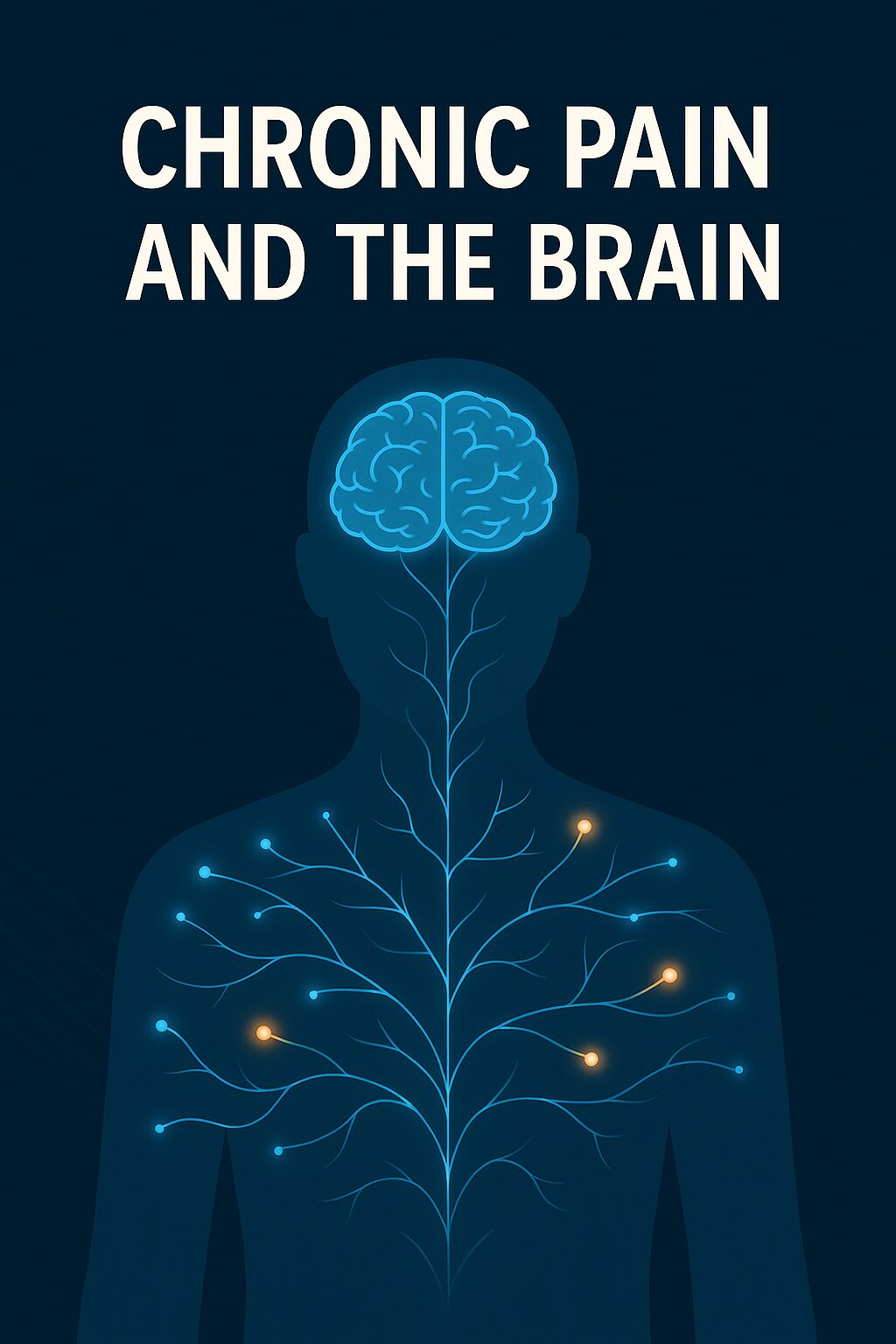
But science has shown that’s only half the story. Pain is not a straight line—it’s a loop. Your body sends signals, but your brain decides what those signals mean. It can amplify them, mute them, or even misinterpret them.
This is why two people with the same injury can experience pain completely differently. One might feel discomfort that fades quickly. Another might feel unrelenting pain that doesn’t match the visible damage. The difference lies in the brain’s processing, not just the body’s tissues.
When pain becomes chronic, it’s often because the brain has rewired itself into a state of hypervigilance.
The Pain System as an Orchestra
A helpful metaphor is to think of pain not as a fire alarm, but as an orchestra. The violins (your nerves) may play their part, but the conductor (your brain) sets the tone. When the system is balanced, the music serves its purpose—warning you, keeping you safe.
But in chronic pain, the orchestra doesn’t just play louder. It plays the wrong notes, at the wrong times, over and over. Circuits become hypersensitive. Even harmless sensations can register as painful.
Scientists describe this network as the pain matrix—a group of brain regions that process and interpret pain:
-
The somatosensory cortex identifies the location and quality of pain.
-
The insula colors pain with emotion—urgency, fear, or dread.
-
The anterior cingulate cortex links pain with motivation and suffering.
-
The prefrontal cortex assigns meaning, shaping how you respond.
Together, they transform raw signals into lived experience. And in chronic pain, these regions change physically and functionally. Brain scans show that circuits become more connected, more excitable, and harder to quiet down.
Neuroplasticity: The Brain Learns Pain
The key concept here is neuroplasticity—the brain’s ability to adapt and rewire.
In chronic pain, neuroplasticity works against you. The more the brain practices pain, the better it gets at producing it. Circuits strengthen, like well-worn paths through a forest. What once required a strong stimulus now happens automatically.
But here’s the hope: the same neuroplasticity that reinforces pain can also unwind it. With the right conditions—whether through therapies, mindfulness, movement, or even simple daily practices—the brain can learn new patterns. It can shift from amplifying pain to calming it.
This is not about positive thinking or ignoring symptoms. It’s about working with the biology of your nervous system instead of against it.
Pain in the Brain Is Not Imaginary
The phrase “pain is in the brain” often gets twisted into something dismissive. But every type of pain—whether from a broken bone, arthritis, or fibromyalgia—lives in the brain. That’s because the brain is the only place where pain can actually be felt.
This doesn’t make it imaginary. It makes it universal. No matter the source, pain requires the brain to become conscious experience.
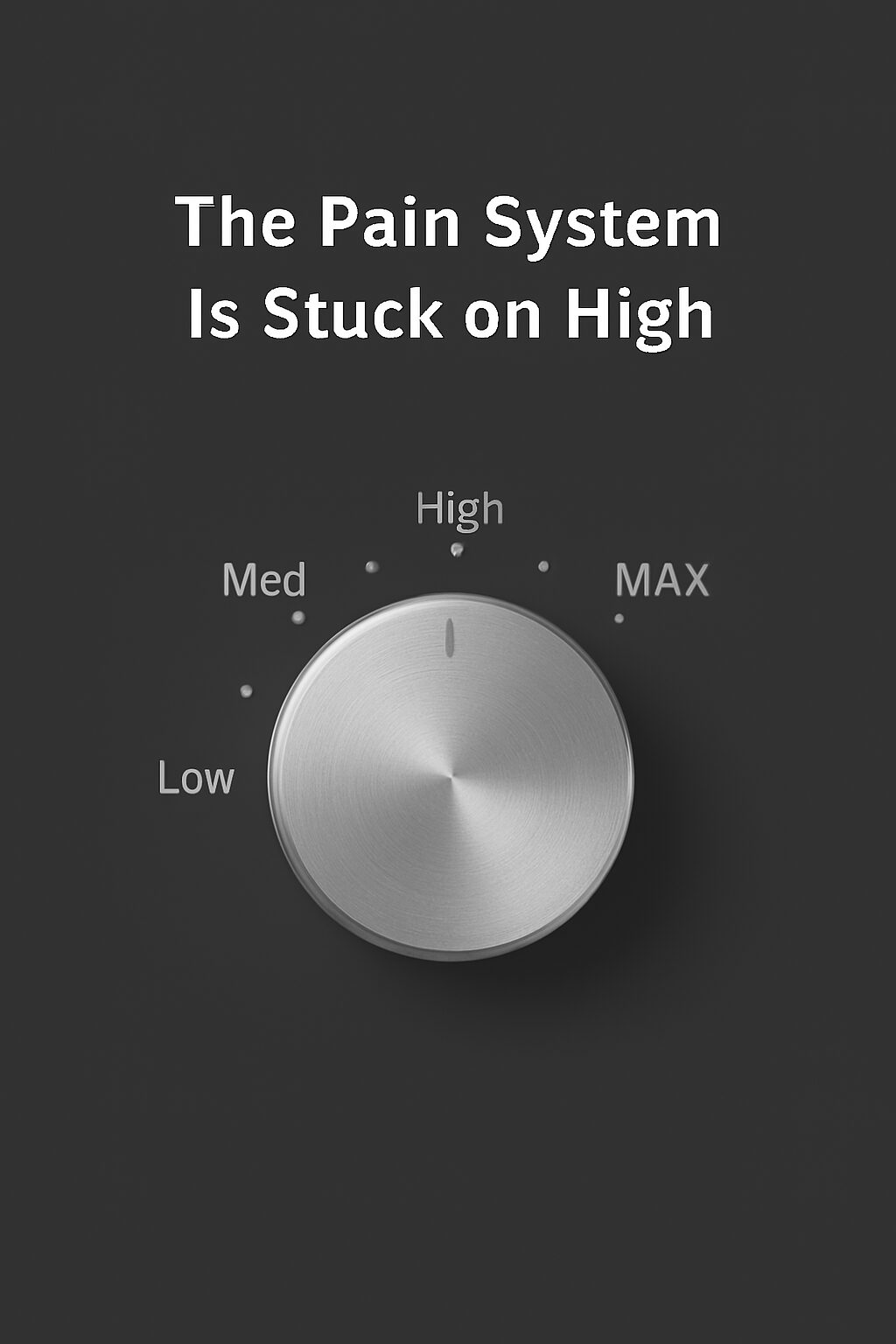
In chronic pain, what’s happening is that the system itself has become dysregulated. It’s like a thermostat that keeps firing the heat even when the room is already warm.
This explains why pain can persist long after an injury has healed, or why scans sometimes fail to show anything “wrong.” The problem isn’t a lack of evidence. It’s that the evidence lives in circuits and pathways too subtle for imaging to capture.
How Chronic Pain Changes the Brain and Body
The brain doesn’t exist in isolation. It constantly communicates with the rest of your body. When pain becomes chronic, these conversations shift in ways that affect multiple systems.
The stress response becomes overactive. Cortisol, the body’s stress hormone, fluctuates wildly. The sympathetic nervous system—the fight-or-flight response—stays on, even when there’s no threat. This state of constant alert magnifies pain and prevents healing.
The immune system joins the cycle. Microglia—cells in the brain that normally protect neurons—become activated, releasing inflammatory signals. Instead of helping, they keep circuits in an excited state.
Hormones also shift. Sleep-wake cycles, reproductive hormones, and growth factors all fall out of balance. The result is poor sleep, low energy, and reduced resilience.
These disruptions create a loop where pain begets more pain, not because your body is broken, but because your systems are stuck.
Breaking the Cycle: The Power of Understanding
If all of this sounds daunting, remember this: your nervous system is not broken beyond repair. It’s adaptive. It changes constantly, in response to both stress and healing.
When you understand how pain is processed, you gain tools to work with your biology. Practices that calm the stress response, restore sleep, support immune balance, and re-train the nervous system can all make a difference.
Sometimes the smallest lever—breathing differently, moving gently, improving sleep routines—creates ripples that shift the whole system.
You’re Not Weak. You’re Adaptive.
When scans don’t explain your pain, or treatments fail, it’s easy to wonder what’s wrong with you. But the answer is often: nothing. Your system is trying to protect you. It’s just stuck in a loop.
Understanding chronic pain and the brain reframes the whole picture. It takes the blame away. It explains why your suffering feels so all-encompassing. And most importantly, it points toward change.
You’re not broken. Your pain is real. And so is your capacity to reshape the very networks that generate it.
This isn’t wishful thinking. It’s neuroscience. And it’s one of the most hopeful frontiers in modern medicine.
Disclaimer: This article is for educational purposes only and does not constitute medical advice. Always consult a qualified healthcare provider for guidance specific to your situation.
📘 Want to go deeper? Explore Mastering Chronic Pain, available now on Amazon.
Take the quiz: www.NoceViva.com/start
Frequently Asked Questions About Chronic Pain and the Brain
1. Is chronic pain really “in the brain”?
Yes, but not in the dismissive way people often mean. All pain—whether acute or chronic—is processed in the brain. In chronic pain, the brain’s pain circuits become more sensitive and amplify signals. This makes pain real, even if scans don’t show obvious damage.
2. How does the brain change with chronic pain?
Chronic pain leads to changes in the brain’s “pain matrix,” including the somatosensory cortex, insula, anterior cingulate cortex, and prefrontal cortex. These areas become more connected and excitable, reinforcing pain signals. This process is called neuroplasticity.
3. Can the brain rewire itself to reduce chronic pain?
Yes. The same neuroplasticity that wires pain into the system can also help rewire it. With the right interventions—such as stress reduction, movement, sleep optimization, and cognitive or behavioral strategies—the brain can adapt and learn new, healthier patterns.
4. Why does chronic pain continue even after an injury heals?
Once the nervous system becomes hypersensitive, it can generate pain signals without ongoing tissue damage. This explains why chronic pain often lingers long after the original injury is gone. The brain and spinal cord continue to amplify signals as if the body were still injured.
5. What does it mean to work “with your biology” in chronic pain?
It means supporting the nervous system’s natural ability to rebalance. Instead of focusing only on symptoms, systems-based care looks at the brain, hormones, immune system, and stress responses together. Small changes in any of these areas can create ripples that reduce pain over time.